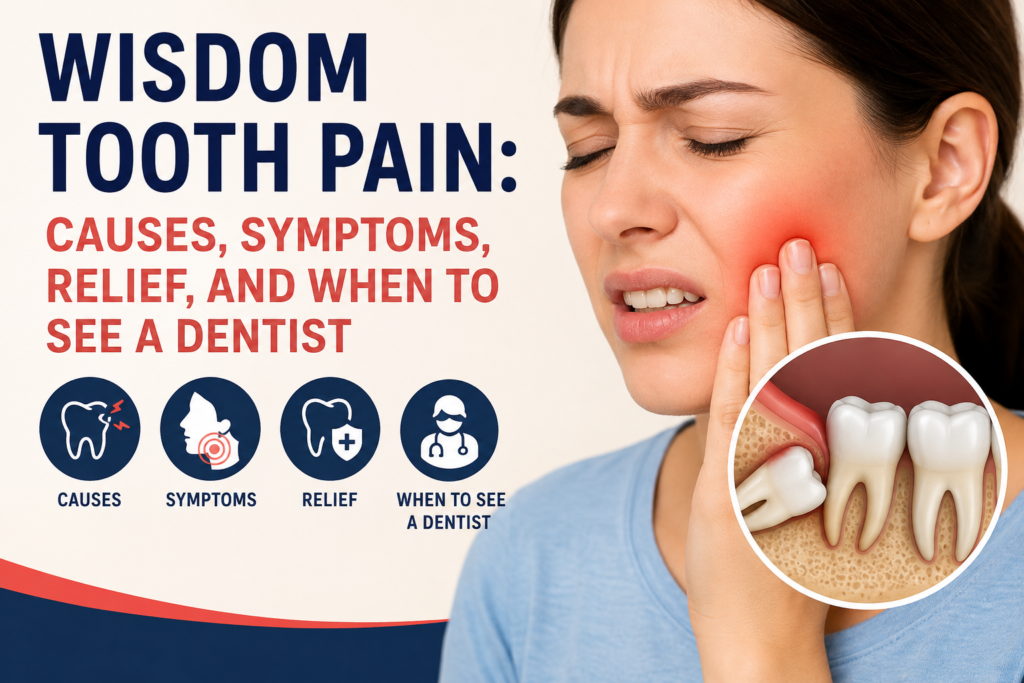
Wisdom tooth pain is a common dental problem that can range from mild soreness to intense, throbbing discomfort. Wisdom teeth are the last set of molars to develop, usually appearing in the late teens or early twenties. When there is not enough room in the jaw for these teeth to grow properly, they can become impacted, partially erupt, or press against nearby teeth, leading to pain and other dental problems.
Understanding what causes wisdom tooth pain, how to manage it at home, and when professional dental treatment is necessary can help prevent complications and protect your oral health.
What Is Wisdom Tooth Pain?
Wisdom tooth pain refers to discomfort associated with the eruption, growth, infection, or impaction of a wisdom tooth. Some people have enough space for their wisdom teeth to grow normally without causing problems. Others may experience pain because the tooth grows at an unusual angle or becomes trapped beneath the gum or jawbone.
The pain may occur around the very back of the mouth and can sometimes spread toward the jaw, ear, or nearby teeth.
What Causes Wisdom Tooth Pain?
Several factors can contribute to pain around a wisdom tooth. Identifying the underlying cause is important because temporary pain relief may not solve the actual dental problem.
1. Wisdom Tooth Eruption
When a wisdom tooth begins to emerge through the gums, it can cause tenderness, pressure, and soreness. The surrounding gum tissue may become irritated as the tooth pushes through.
This type of discomfort is often temporary, but persistent or worsening pain should be evaluated by a dentist.
2. Impacted Wisdom Teeth
An impacted wisdom tooth is one that does not have enough space to emerge properly. It may remain partially or completely beneath the gum.
An impacted tooth can grow sideways, toward the neighboring molar, or at another unusual angle. This can cause pressure, inflammation, pain, and damage to surrounding teeth.
3. Gum Infection Around a Wisdom Tooth
A partially erupted wisdom tooth can create a small pocket between the tooth and gum. Food particles and bacteria can become trapped in this area, causing inflammation or infection.
This condition, commonly called pericoronitis, may cause swelling, redness, bad breath, unpleasant taste, and significant pain.
4. Tooth Decay
Wisdom teeth are located at the back of the mouth, making them difficult to clean properly. As a result, plaque and food debris can accumulate around them.
If bacteria damage the tooth enamel, a cavity may develop and lead to sensitivity or persistent toothache.
5. Pressure on Nearby Teeth
When a wisdom tooth grows into a crowded area, it may put pressure on neighboring teeth. This pressure can contribute to discomfort and make cleaning between the teeth more difficult.
Common Symptoms of Wisdom Tooth Pain
Wisdom tooth pain does not always feel the same for everyone. Common symptoms include:
- Pain or throbbing at the back of the mouth
- Tender or swollen gums
- Jaw soreness or stiffness
- Pain when chewing
- Redness around the wisdom tooth
- Bad breath
- An unpleasant taste in the mouth
- Sensitivity around nearby teeth
- Difficulty opening the mouth
- Swelling around the jaw or cheek
If these symptoms become severe or continue to get worse, professional dental evaluation is important.
How to Relieve Wisdom Tooth Pain at Home
If you are experiencing mild wisdom tooth discomfort, several measures may provide temporary relief while you arrange a dental appointment.
Rinse With Warm Salt Water
A warm salt-water rinse can help keep the area clean and soothe irritated gums. Gently rinse your mouth and spit the solution out rather than swallowing it.
Apply a Cold Compress
If your cheek is swollen, placing a cold compress against the outside of your face for short periods may help reduce swelling and numb some of the discomfort.
Keep the Area Clean
Continue brushing and flossing carefully. Although the area may be tender, maintaining good oral hygiene can help reduce the buildup of food particles and bacteria.
Use Over-the-Counter Pain Relief
Common over-the-counter pain relievers may help manage dental pain when used according to the product label and appropriate medical guidance. If you have medical conditions, take other medicines, are pregnant, or are unsure which medication is safe for you, ask a healthcare professional or pharmacist.
Home remedies can provide temporary comfort, but they do not remove an impacted tooth, treat a dental abscess, or address other underlying causes.
When Should You See a Dentist for Wisdom Tooth Pain?
You should arrange a dental examination if wisdom tooth pain is persistent, recurrent, or interfering with eating, sleeping, or normal activities.
A dentist may examine your teeth and gums and may recommend dental X-rays to determine the position of the wisdom tooth. This can help identify impaction, infection, decay, or problems affecting nearby teeth.
Do not rely on home treatment alone if the pain keeps returning. Repeated symptoms can indicate an underlying problem that needs professional treatment.
When Is Wisdom Tooth Pain an Emergency?
Some symptoms require urgent dental or medical attention. Seek urgent care if you develop significant facial or jaw swelling, difficulty breathing or swallowing, a rapidly worsening infection, severe pain accompanied by fever, or swelling that is spreading.
These symptoms can indicate a potentially serious dental infection that should not be ignored.
Does Wisdom Tooth Pain Go Away on Its Own?
Sometimes mild discomfort associated with normal tooth eruption may improve as the tooth continues to emerge. However, pain caused by an impacted wisdom tooth, infection, significant decay, or another dental problem may persist or return.
Even if the pain disappears temporarily, the underlying issue may still be present. A dental examination can determine whether treatment is necessary.
How Is Wisdom Tooth Pain Treated?
Treatment depends on the cause and condition of the tooth. A dentist may recommend improved cleaning, treatment for decay, management of an infection, or monitoring if the tooth is healthy and not causing problems.
In cases where a wisdom tooth is severely impacted, repeatedly infected, damaged, or causing problems for neighboring teeth, the dentist may recommend wisdom tooth removal.
Wisdom tooth extraction is a common dental procedure. The dentist will assess the tooth’s position, your oral health, and the potential risks before recommending removal.
How Can You Prevent Wisdom Tooth Problems?
You cannot always prevent problems caused by the position or development of wisdom teeth, but good oral hygiene can reduce the risk of decay and gum infection.
Brush twice a day with fluoride toothpaste, clean between your teeth regularly, and pay particular attention to the back areas of your mouth. Regular dental checkups can also help identify wisdom tooth problems before they become more serious.
Frequently Asked Questions About Wisdom Tooth Pain
How long does wisdom tooth pain last?
The duration varies depending on the cause. Mild eruption-related discomfort may settle, while pain caused by infection, impaction, or decay can continue until the underlying problem is treated.
Why does my wisdom tooth hurt at night?
Dental pain can feel more noticeable at night because there are fewer distractions and lying down may make throbbing discomfort more noticeable. Persistent nighttime pain should still be evaluated by a dentist.
Can wisdom tooth pain cause an earache?
Yes. Pain from a wisdom tooth can sometimes radiate toward the jaw, ear, or surrounding areas because these structures share nerve pathways. However, an earache can have many other causes, so persistent ear pain should be properly evaluated.
Should I remove a wisdom tooth if it does not hurt?
Not necessarily. Healthy wisdom teeth that are properly positioned and easy to clean may not need removal. A dentist can evaluate their position and condition and determine whether monitoring or treatment is appropriate.
Final Thoughts
Wisdom tooth pain can result from normal eruption, impaction, gum inflammation, infection, tooth decay, or pressure on neighboring teeth. While simple measures such as warm salt-water rinses, cold compresses, careful oral hygiene, and appropriate over-the-counter pain relief may provide temporary comfort, they do not address every underlying cause.
If your wisdom tooth pain is severe, persistent, recurrent, or accompanied by swelling, fever, difficulty opening your mouth, or trouble swallowing or breathing, seek professional dental care promptly. Getting the cause diagnosed early can help prevent the problem from becoming more painful or complicated.
A dentist can determine whether your wisdom tooth can be safely monitored or whether it requires treatment or removal. Good oral hygiene and regular dental checkups remain some of the best ways to protect your teeth and gums as your wisdom teeth develop.



Leave a Reply