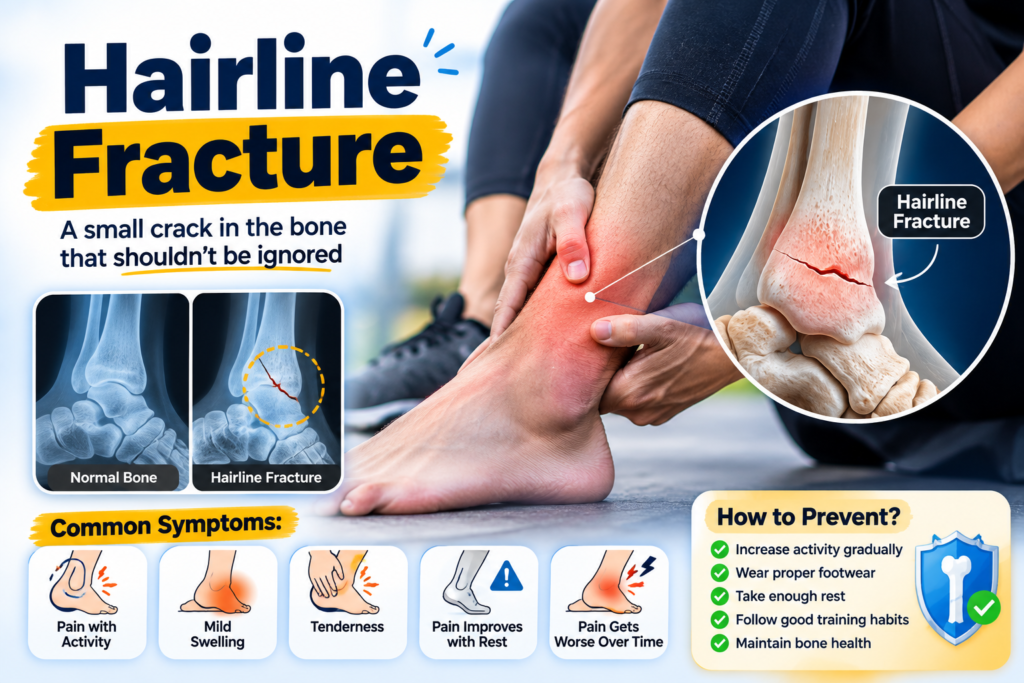
A hairline fracture is a small crack in a bone. It is usually caused by repeated stress or overuse rather than one major injury. Hairline fractures are common in people who run, jump, play sports, or suddenly increase their physical activity. They can also happen after a fall or other injury.
Although a hairline fracture may seem minor, it should not be ignored. Continuing to put stress on the injured bone can make the crack worse and may lead to a more serious fracture.
What Is a Hairline Fracture?
A hairline fracture is a thin crack in a bone. It may not completely break the bone into separate pieces, which is why it can sometimes be difficult to notice at first.
Hairline fractures are also commonly called stress fractures when they develop because of repeated pressure on a bone. They can affect different parts of the body, including the feet, ankles, lower legs, hips, and other weight-bearing bones.
The symptoms may begin slowly and become more noticeable during physical activity. Early attention can help prevent the injury from getting worse.
Common Causes of Hairline Fractures
Repeated stress is one of the most common causes of a hairline fracture. When bones are exposed to more pressure than they can recover from, tiny cracks can develop over time.
Common causes include:
- Running or walking long distances
- Suddenly increasing exercise intensity
- Repeated jumping or high-impact sports
- Wearing poorly fitting or unsuitable footwear
- Training on hard surfaces
- Returning to exercise too quickly after a break
A hairline fracture can also occur because of a sudden injury, such as a fall or direct impact.
Hairline Fracture Symptoms
The symptoms of a hairline fracture can vary depending on the affected bone. Pain is usually the most common warning sign.
You may notice:
- Pain that becomes worse with activity
- Tenderness around a specific area
- Mild swelling
- Pain that improves with rest in the early stages
- Pain that gradually becomes more frequent or severe
Some people initially mistake the pain for normal muscle soreness. However, pain that repeatedly returns during exercise or becomes worse over time should be checked by a healthcare professional.
Where Do Hairline Fractures Commonly Occur?
Hairline fractures can happen in many bones, but they are particularly common in areas that carry weight or experience repeated impact.
The foot and lower leg are common locations, especially among runners and athletes. Hairline fractures can also occur in the hip, thigh, ankle, and other bones depending on the activity and cause.
The location of the pain can help a healthcare professional determine which bone may be affected, but medical evaluation is needed for an accurate diagnosis.
How Is a Hairline Fracture Diagnosed?
A healthcare professional will usually ask about your symptoms, physical activity, and any recent injury. They may gently examine the affected area for tenderness and swelling.
Imaging tests may also be used. An early hairline fracture does not always appear clearly on a standard X-ray, particularly when the crack is very small or recent. Depending on the situation, a doctor may recommend additional imaging such as an MRI or other appropriate tests.
Getting the correct diagnosis is important because other injuries can cause similar symptoms.
Hairline Fracture Treatment
Treatment depends on the location and severity of the fracture. In many cases, the main goal is to give the bone enough time to heal.
Treatment may include:
- Resting from activities that cause pain
- Reducing weight or pressure on the affected bone
- Using supportive footwear or a protective boot when recommended
- Gradually returning to normal activities
- Following a healthcare professional’s recovery plan
Some more serious fractures may require additional treatment. It is important not to return to sports or intense exercise simply because the pain has improved.
How Long Does a Hairline Fracture Take to Heal?
Healing time varies based on the affected bone, severity of the injury, overall health, and how well the bone is protected during recovery. Many stress fractures take several weeks to heal, but some may require longer.
Following medical advice and avoiding activities that place stress on the injured bone can support recovery. Returning to high-impact exercise too early can delay healing or worsen the fracture.
When Should You See a Doctor?
You should consider medical evaluation if you have persistent or worsening bone pain, especially when the pain is linked to physical activity. It is also important to seek professional care after an injury if you have significant pain, swelling, difficulty walking, or difficulty putting weight on the affected area.
Early diagnosis can help prevent a small crack from developing into a more serious injury.
Preventing Hairline Fractures
You can reduce the risk of stress-related bone injuries by increasing physical activity gradually. Give your body enough time to recover between demanding workouts and use appropriate footwear for your activity.
A balanced diet that provides adequate nutrients for bone health is also important. Strength training and proper exercise technique may help support the muscles and bones involved in physical activity.
Final Thoughts
A hairline fracture is a small crack in a bone, but it should still be taken seriously. Pain that develops gradually, gets worse with activity, or continues despite rest may be a warning sign. Rest, proper diagnosis, and appropriate treatment can help the bone heal safely.
If you suspect that you have a hairline fracture, avoid activities that increase the pain and speak with a qualified healthcare professional for proper evaluation and treatment.


Leave a Reply