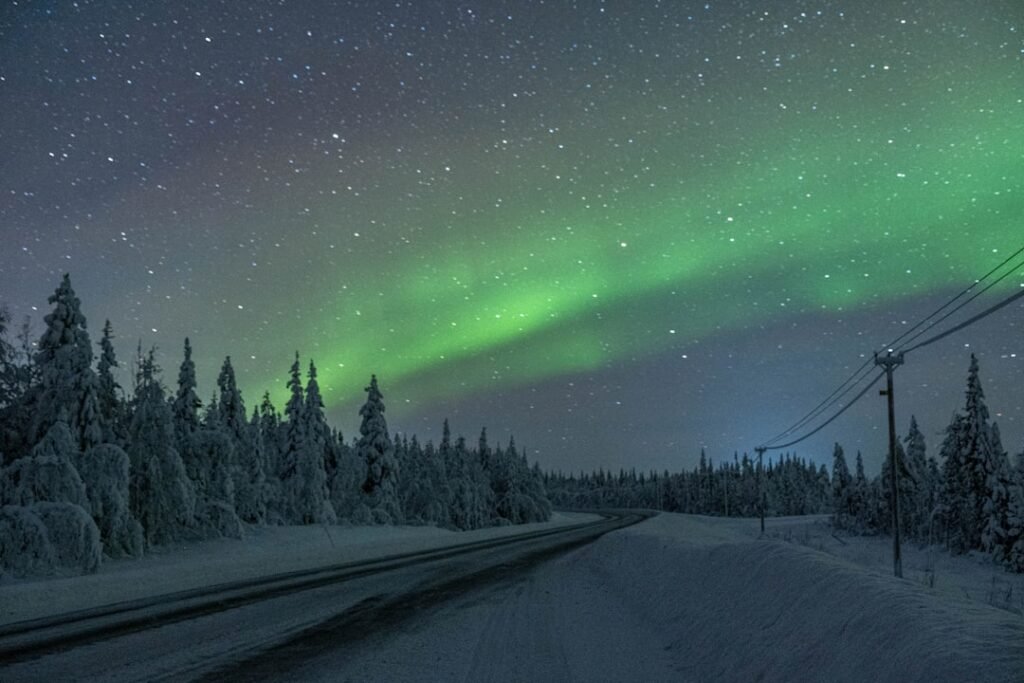
The auroras that lit up skies far from the poles in recent years were beautiful — and they were warnings. They marked the peak phase of the Sun’s roughly 11-year activity cycle, and the elevated storminess doesn’t switch off overnight. Modern civilization is more exposed to space weather than at any point in history, simply because so much more of it now runs on satellites and long wires.
What a solar storm actually does
A coronal mass ejection slams charged particles into Earth’s magnetic field. The consequences cascade: GPS accuracy degrades as the ionosphere churns; high-frequency radio blacks out on polar aviation routes; satellites in low orbit feel increased atmospheric drag and can lose altitude; and geomagnetically induced currents flow through power grids, stressing transformers that take months to replace.
The satellite century’s soft underbelly
Tens of thousands of satellites now underpin navigation, timing, communications, and finance — timing signals from navigation constellations synchronize everything from stock exchanges to mobile networks. Historic storms like the 1859 Carrington Event predate all of it. A comparable event today would be a global infrastructure incident, with cost estimates running to trillions. That’s why space-weather forecasting has moved from academic niche to national-security budget line.
Forecasting is improving — slowly
New solar observatories and models give operators hours to days of warning: grid operators can reconfigure loads, airlines reroute polar flights, satellite operators pause orbit-raising. The gap is precision — predicting a storm’s magnetic orientation, which determines its punch, remains the hard problem. Machine-learning models trained on decades of solar data are narrowing it.
- Transformer stockpiles are the unglamorous resilience metric that matters most.
- Watch commercial space-weather services emerge as satellite fleets buy bespoke forecasts.
- Aurora tourism, meanwhile, is having its best years in decades — the pleasant side effect.
The Sun doesn’t care about our infrastructure. The good news: for the first time, we can see the punches coming. The task is being ready to roll with them.
Leave a Reply