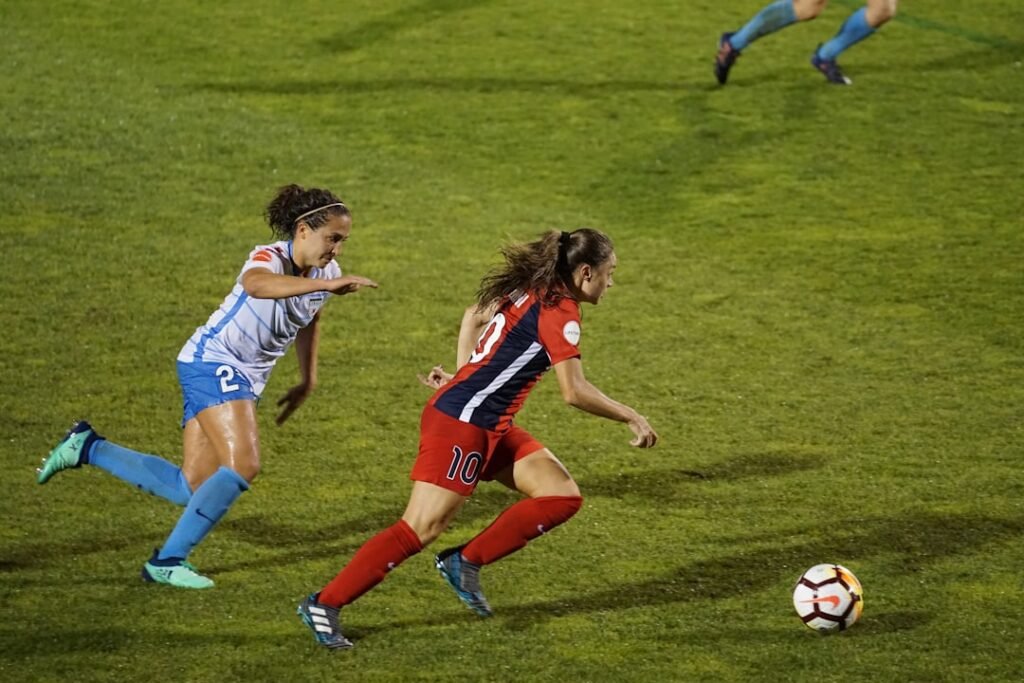
For decades, women’s sport was framed as a cause. The numbers now frame it as a market. Attendance records keep falling, franchise valuations are multiplying, and broadcasters that once bundled women’s competitions as an afterthought now bid for them as standalone properties.
What changed
Three things converged. Investment in professional structures — full-time contracts, proper medical staff, dedicated stadiums — raised the quality of the product. Streaming lowered distribution barriers, letting leagues reach fans directly instead of waiting for linear TV slots. And a generation of athletes built personal audiences that travel with them, giving sponsors measurable reach rather than goodwill.
The valuation curve
Franchise prices in top women’s leagues have risen at a pace men’s sport took decades to achieve — from single-digit millions to nine figures in a handful of years. Early institutional investors are already sitting on multiples. The bet is simple: audiences are growing from a low base with high engagement, while rights remain cheap relative to eyeballs. That arbitrage window is closing fast.
The gaps that remain
Growth is uneven. Marquee competitions sell out; mid-table weeknight fixtures still fight for attention. Media coverage concentrates on a few stars. And the infrastructure debt — training facilities, youth pathways, coaching pipelines — takes years to repay. The leagues that solve the everyday product, not just the showcase events, will own the next decade.
- Standalone broadcast deals are the metric to watch — bundling hides real value.
- Women’s sport merchandise remains massively undersupplied relative to demand.
- Multi-club ownership groups are now building women’s portfolios deliberately, not incidentally.
The question investors ask has flipped from “why women’s sport?” to “why didn’t we move earlier?” That’s what a market arriving looks like.


Leave a Reply