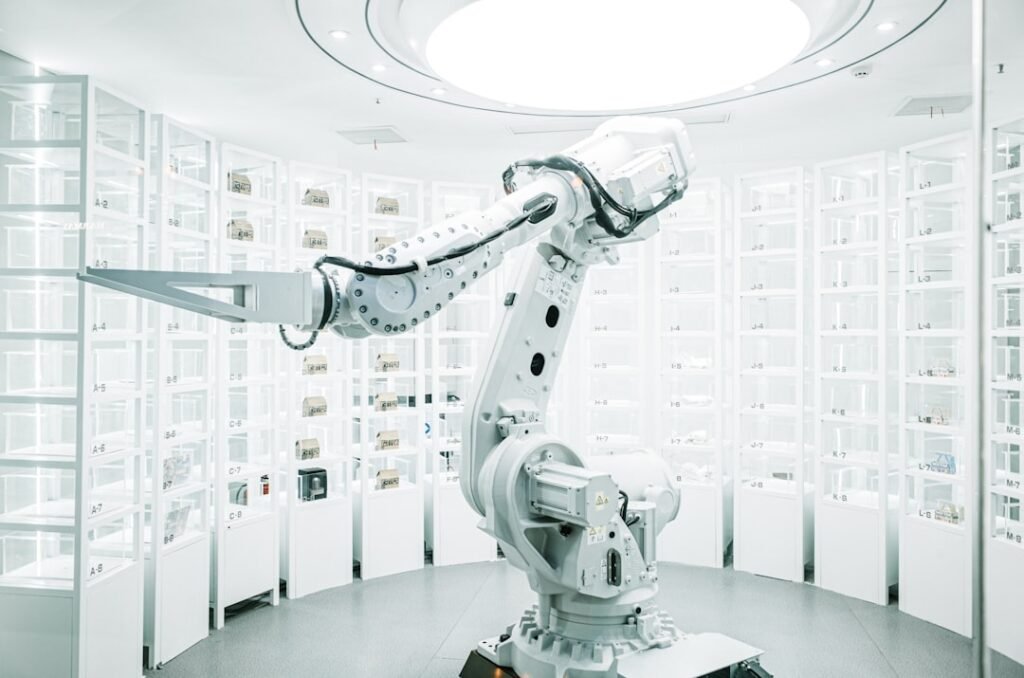
The single all-purpose chatbot is quietly disappearing from the enterprise. In its place, companies in 2026 are deploying coordinated teams of specialized AI agents — one reads incoming orders, another checks inventory, a third drafts the invoice, a fourth flags anomalies for a human. Analysts call these digital assembly lines, and they are the fastest-growing category in enterprise software this year.
Why One Agent Was Never Enough
The limitation was always context. A single model juggling a complex, multi-step process runs out of working memory and starts making mistakes. Splitting the process across specialized agents — each tuned for one narrow job — keeps every step sharp. Google Cloud’s 2026 agent trends report and Microsoft’s own forecasts both identify multi-agent collaboration as the decisive shift of the year.
How a Digital Assembly Line Works
- An orchestrator agent receives the goal and breaks it into steps.
- Specialist agents execute in parallel — data lookup, drafting, compliance checks, customer replies.
- A reviewer agent validates outputs against rules before anything ships.
- A human checkpoint approves the handful of decisions that carry real risk.
Where the Money Is Going
Customer service, claims processing, logistics scheduling, and financial reconciliation lead adoption. Mid-size firms report the biggest wins: processes that once needed five back-office staff now run with one supervisor and an agent team. Vendors from startups to the hyperscalers are racing to sell orchestration platforms, and consulting firms have rebuilt entire practices around agent deployment.
The Honest Caveats
Multi-agent systems multiply not just productivity but failure modes. When agents hand off work, errors can compound silently. The firms succeeding in 2026 treat agents like junior employees: clear job descriptions, limited permissions, audit logs, and a human who owns the outcome. The ones failing bought the hype and skipped the guardrails.
The Bottom Line
Agentic AI stopped being a demo this year. Business value in 2026 comes from human-guided, multi-step agent workflows — and the companies mastering the assembly-line pattern now are setting the productivity baseline their competitors will be chasing for the rest of the decade.


Leave a Reply